The 'hell' hill - A Mark Cockbain Event I’ll Never forget
- Victoria Owens

- Dec 11, 2025
- 27 min read
To understand my story, you first need to understand The Hill, or as I came to know it, The 'Hell' Hill.
This isn’t a race with cheering crowds, colourful banners, or medals waiting at the end. This is a Mark Cockbain event, stripped down to the raw bones of endurance. No frills. No distractions. No illusions. Just you, the terrain, and one uncomfortable, unflinching question: How far are you really willing to go?



The Hill, the infamous Wrekin Hill in Shropshire, looks harmless from a distance. But up close, under Cockbain rules, it becomes something else entirely. Each loop is 2.84 miles, and we were tasked with 55 laps (plus a little extra), covering 160 miles over 48 hours and climbing more than the height of Everest.
There is no crew. No pacers. No headphones. No poles. Stop for more than 30 minutes, and you’re out. Buy anything at the halfway house, and you’re out. Every step is yours alone.
It’s relentless. Up and down. Out and back. Harsh gradients, an exposed summiting landscape, long stretches that test everything you have, physically, mentally, emotionally. And the distance? That’s only part of it. The real challenge is the repetition. The monotony. The climb that just keeps taking and taking and taking.
There are no shortcuts. No easy sections. No “it gets better from here.”
It’s raw. It’s stripped back. It’s the purest form of mental warfare disguised as an ultra.
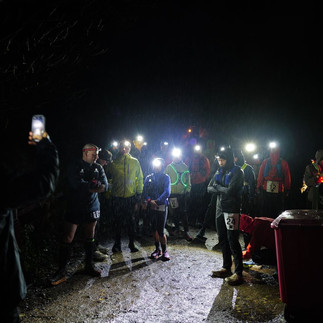
The event begins in a quiet, cold darkness that makes you pull your jacket tighter and question why you ever signed up. The air feels heavy, dense with anticipation. Head torches bob around like fireflies. Competitors shuffle, stretch, pace, or simply stare ahead, each lost in their own private world of nerves, doubt, and determination.
There’s no hype. No fanfare. Just a quiet briefing that reminds you this isn’t about glory, it’s about grit, endurance, and honesty with yourself.
Then you begin. And almost immediately, The Hill shows its true intentions. The climb starts too soon. The terrain tilts up faster than your legs expect. Reality hits: this is not a gentle day out. Every step demands something from you. Every metre reminds you what you came here to face.
Lap after lap, the Wrekin steals the tiniest pieces of energy from you, bit by bit, until you’re left questioning what you even have left to give. The repetition claws at your mind. The darkness feels heavier. The climb feels steeper. And all the while, the rules hang over you like a quiet, unyielding threat.
This was the stage. This was the challenge. This was The ‘Hell’ Hill I was about to step onto, undertrained, unwell, and already wrestling with the question: Do I even belong here?
twenty-four runners and a start line;
Twenty‑four of us stood there. Some seasoned, some silently terrified, some pretending not to be. A handful had survived Cockbain events before. Others, like Stuart Obree, the man who always stood beside me, were stepping into that world for the first time, wide‑eyed, curious, and unaware of just how much a Mark Cockbain event can take from you. His eyes held nerves and excitement, but behind that flicker was a determination with the possibility to carry him further than he might have imagined.
Out of the twenty-four of us, only four were female, and among them was Julie Bethune, Scottish and quietly commanding respect. Julie is not only a personal friend, but one of the most resilient female ultra runners I know. Her competitiveness never overshadows her kindness. She moves through races with a blend of determination, grit, and generosity that leaves a mark on everyone around her.
Like me, Julie had also arrived less prepared than she’d hoped, not from neglect, but because life asked more of her at home. Training had taken second place to parenting, as it rightly should, and I admired her deeply for that. For still standing on that start line anyway. For still being willing to offer whatever she had left inside her.
Also among the women on that line was Sarah Parry, lit up by the photographers’ constant attention. Small in appearance but immense in ability, Sarah has carved a name for herself through relentless miles, race records, world records, and a string of extraordinary achievements. There’s no smoke or mirrors with her, she doesn’t need them. There’s a quiet polish, a natural, effortless poise that isn’t performance or vanity, just another layer of her strength. Her running does the talking, and it says everything you need to know.
And then there was me. This wasn’t my first Cockbain start line, but deep down I knew it might be my last. Not out of drama, out of honesty. I was under-trained, unwell, and worn down in ways I didn’t yet have the language for. If refunds were offered, I would’ve taken one without hesitation. But Cockbain doesn’t do refunds. And honestly? If he did, by the time race day actually arrived, I’m not sure there would’ve been anyone left on that start line at all.
That’s the thing about these events: you sign up when you’re brave, you show up when you’re stubborn, and you start when you’re too far in to back out. So there we were, twenty‑four of us, bound together only by a line on the ground, the weight of the night, and the unspoken knowledge that none of us truly knew what was coming next.
Standing on the Edge of What’s Possible;
When “one minute” was called into the cold air, a hush rolled across the field, a silence so complete it felt like the world held its breath with us. I glanced across at Stuart. We’d signed up for this madness together, and in that final quiet moment before the clock swallowed us, something twisted in my stomach, not fear, not excitement, but a strange mix of possibility and doubt. I couldn’t work out what was realistic anymore. What I was capable of. Where the line between hope and honesty really lay.
Stu and I had agreed to take the first summit together. Starting at my pace would keep things steady for him, and having someone beside me for that opening climb felt grounding. Not to steady nerves, but to help me find my way, my rhythm, my footing, my place on this hill that would soon start taking from us inch by inch.
And then, without ceremony, without hype… we began. The first summit I shared with Stuart. We touched the top almost at the same moment, a small, whispered victory in the dark, before he slipped away into the night, his stride lengthening, his confidence carrying him, his silhouette shrinking until his torchlight disappeared completely from my sight. I expected that to be the moment I became truly alone.
But to my surprise, my little legs carried me back into the stream of hill runners again. I found myself alongside a few other willing victims of The 'Hell' Hill, moving in the same rhythm of quiet suffering. I shared a couple of summits with familiar faces, runners I’d met at other events, others I’d never spoken to before. The conversations were gentle, comforting even, but beneath every word was the reminder: I am undertrained. I am not ready. Even this talking might be taking too much from me. Starting at 9PM meant slipping into the dark far too soon, a long, stretched-out night on The Hill that felt endless from the very first steps. The rain arrived almost immediately and never really left. It hammered, softened, teased with brief moments of drizzle, then snapped back into a relentless downpour the second you dared to hope it was easing.
The darkness swallowed everything. Headtorches from other runners sliced through it like frantic blades, their beams bouncing wildly off wet stones, spraying light across puddles and slick mud in strange, dizzying patterns. Nothing stayed still. The ground seemed to shift under us, moving, twisting, alive in a way only a storm-soaked hill at night can be.
Every ascent felt like a battle not just against the steepness, but against the assault of rain and light. My clothes clung to me, heavy and cold. My shoes filled, emptied, and filled again. Wet gear rubbed raw in places I didn’t want to think about.
My clothes weren’t the only thing getting wet, the whole hill changed beneath the weather. Mud loosened until it had no grip left. The descent turned into a slide. A river carved its way down the climb, forcing us to wade straight through it, cold water rushing over our feet, soaking everything we pretended was “waterproof.” Puddles swelled into small lakes, stones glazed over into slick traps, and every step became a careful negotiation between balance and surrender.
The world shrank down to the light in front of me, the hiss of rain, and the steady rise of the hill. It was raw. It was messy. And it was exactly what the night on The Hill was, unforgiving, relentless, and strangely, quietly beautiful.
the first six and the decent that followed;
Initially, I moved a little quicker than expected, not fast, not impressive, but better than the zero expectations I had arrived with. I came as a walker, with no real intention of running, no illusion of completing anything at all. It felt like starting again from the ground up, holding nothing but honesty and uncertainty. And yet, something in those early loops felt almost hopeful, naive, maybe even childlike, but hopeful all the same.
But those first six summits… I didn't hate them. And that surprised me more than anything.
I hadn’t expected joy. I hadn’t expected lightness. I hadn’t expected anything other than a long, wet trudge through the dark , but there it was, tucked between the rain and the mud and the rhythm of the climb. A kind of simple, earnest pleasure in moving upward. In touching the summit marker. In turning around and doing it again.
But summit six…that was where the innocence began to slip.




snap back to reality;
And then it happened. Sleep deprivation hit me like a wave I never saw coming.
For three full climbs, I could barely keep my eyes open. The world around me blurred into smears of torchlight and rain. I wavered on my feet, drifting sideways, catching myself at the last second. I spoke out loud just to hear a voice, any voice, even if it was my own.
“Stay awake, Vic… stay awake.”
I pressed my hands hard against my face, trying to shock myself back into my body, trying to force some kind of connection between who I was and where I was. I blinked into the darkness, but the darkness blinked back. My thoughts slipped sideways. Time bent. The hill moved underneath me in ways I couldn’t trust.
This wasn’t fatigue. This wasn’t defeat. This was my mind unravelling, thread by thread.
The hill, which had felt almost childlike and playful earlier, something I loved, something that surprised me with joy, suddenly shifted. The magic dimmed. The companionship I’d felt morphed into something heavier, darker, demanding.
The obsessive drive that had carried me summit after summit didn’t disappear. It twisted. Turned inward. Pulled me somewhere I didn’t want to go.
My legs weren’t just tired, they were hollow. Empty. A reminder of every mile I hadn’t trained, every session I’d missed, every good intention that stayed an intention. And for the first time that night, I knew I couldn’t ignore it anymore.
Reality snapped back into place like a cold slap. The hill wasn’t letting me hide. Not in magic, not in momentum, not in obsession.
It was showing me the truth: my limits, my lack of preparation, and the razor-thin edge I was walking just to stay upright.
And somewhere in that dark, trembling space between exhaustion and awareness, I realised, the hill wasn’t trying to break me. It was trying to wake me.
And then, of course, the worst possible thing for someone fighting sleep happened.
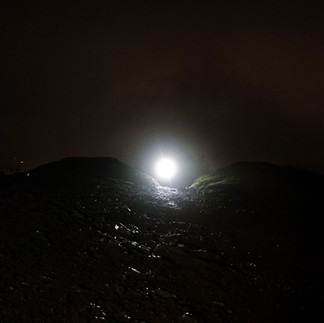
My headtorch flickered once. Then twice. And then it died.
No light. No warning. Just a blunt, absolute darkness, the kind that lands all at once, as if someone has closed a door on the world.
For a moment I just stood there, halfway up the Wrekin at 3AM, soaked, exhausted, blinking into nothing. The irony wasn’t lost on me; if I’d had the energy, I might’ve laughed.
Because of course this was the moment the hill chose.
But I didn’t have the luxury of stopping. I had no choice except to keep moving upward, toward the faint silver glow of the moon that had finally pushed through the mist. The cloud cover that had smothered the summit all night had shifted just enough to guide me.
Reaching the top brought a sharp, shaky relief. Followed immediately by dread.
I still had to get down. In the dark. With dead legs… and now a dead torch.
I started descending slowly, feeling for the ground with my feet, lifting them higher than felt natural, terrified of catching them on the rocks. Each step was a negotiation with gravity, a silent prayer not to fall.
I thumbed the power button on the torch repeatedly, coaxing, begging, and every now and then it gave me two or three seconds of dim, flickering light. Enough to see the next few feet of trail. Enough to stay upright. Enough to keep going.
Then darkness again.
It was raw, it was slow, it was terrifying, but I kept moving. Because the hill doesn’t wait. And in that moment, neither could I.
Flickers in the Dark;
By the 10th summit, and a new headtorch in hand, the reality that I wasn’t going to reach the 24 hours I’d hoped for began to settle in. I hadn’t fully allowed myself to accept it yet, but deep down, under a layer I was trying to ignore, it was waiting for me.
On the climb to the 11th summit, my headtorch caught sight of Julie ahead, and we came to a stop, exchanging a few quiet words. Her legs were protesting in the same way mine were, a mirror of the lack of preparation for this particular event. There was an understanding in that moment, this kind of challenge demands specific training and commitment, something life hadn’t allowed us recently.
I told Julie that I wanted to reach at least 12 hours. Without hesitation, she said she would join me, that together we would summit. Her determination was so clear that she turned back and retraced her steps to the summit, adding extra distance to her legs just so she could share some of the climbs with me. In that moment, she gave me far more than companionship, she offered a lifeline.
Her gesture was entirely selfless, a true reflection of the person she is. Julie wasn’t just another runner on the hill; she was a friend showing up fully, choosing to share her strength, time, and effort so I wouldn’t have to face the challenge alone. Her quiet generosity, that unwavering willingness to carry some of the burden alongside me, reminded me in a profound way that friendship is as much about presence and support as it is about shared miles.
I felt deeply grateful, grateful for her attention, her care, her steady presence in the dark and rain, and for the simple truth that some connections on the hill transcend finish lines. That summit, that shared moment with Julie, made me realise that the friendships forged in these moments, were more sustaining, more precious, and more unforgettable than any medal or record I could, or would, ever chase. Jogging down to the bottom with Julie took the noise out of my head. The doubts, the numbers, the quiet panic about how much strength was left, they didn’t disappear, but they softened, faded into the background like static. Instead, I let myself listen to her. I let her voice become the thing I followed, not the burn in my legs or the heaviness pooling in my body.
She told me her story, the balancing act of family life and training, the sacrifices and realities that don’t get printed next to race results, the tiredness she’d carried into this event just like I had. There was something grounding in her honesty. Something steadying. It made me feel less like I was coming apart and more like… this was simply part of it. Part of the truth we all bring to the hill.
It wasn’t emotional or dramatic. It was just two runners, two friends, sharing a strip of muddy descent in the rain, talking like we always had, step for step, breath for breath.
And in that small, ordinary moment, just listening, the climb felt a little less heavy. The night felt a little less dark. And for the first time in hours, I felt like I wasn’t carrying it all alone.
saying goodbye to a friend;
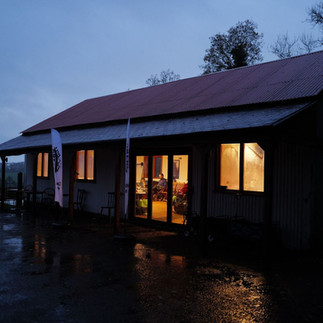
Dibbing our timing chip wristbands at the bottom, we turned to face the climb once more. Each step upward felt heavier than the last, but the rhythm of the hill carried us. When we reached the Halfway House, Julie stopped and told me she couldn’t go on. I followed her inside, taking in the wet, tired determination etched into every mile she had fought through. I caught a photo as she rang the DNF bell, a single, sharp sound that felt enormous in the quiet. It wasn’t a defeat; it was courage in its purest form, honesty and selfless determination distilled into one resolute act. Summit after summit, she had offered herself to the hill, and now she did so on her own terms.
And then I stepped back out into the night for my tenth hour. A quiet, stubborn fire burned in me: reach twelve hours, push one summit at a time, see how far I could stretch the legs and strenght I had left. Each step became a negotiation with my own body, heavy, unsteady, but still moving. I was alone again, but not truly alone. Julie’s presence lingered with me, her generosity, her companionship, the quiet strength she had lent me, and it became a lifeline, a tether that pulled me upward, one summit, one relentless step at a time.
the hill that spoke;
It took only a few minutes for the whole fragile structure holding me together to buckle.
My legs revolted first, a sudden, brutal mutiny.
It’s such a strange kind of suffering, when your brain is still sharp and willing, shouting instructions with the urgency of survival, but your body refuses to listen. My legs had turned to something unrecognisable… not quite mine anymore, heavy and numb and hollow at the same time.
Each step felt like trying to drag dead weight uphill. The muscles didn’t want to lift or bend or even acknowledge that climbing was still part of the plan. The summit stretched away from me, warping into something impossibly distant. Every incline looked steeper than it had an hour ago. Every slick patch of mud felt like it could swallow my foot whole. Even the smallest rocks were obstacles that required full concentration just to step over without crumpling.
I fought gravity, fought fatigue, fought the sinking dread that my body was shutting down loop by loop. It became a battle against myself, not dramatic, not heroic, just relentlessly hard. The closer I got to the top, the heavier everything became. And it wasn’t just physical heaviness… it was the weight of convincing a part of myself that desperately wanted to quit to keep existing for just one more step, and then another, and then another still.
And in that moment, as I reached the top, knowing the day was breaking, knowing this would be the last summit in the dark of night, I spoke to the hill.
I heard my words echo back: Hey Hill, what’s happening?
It wasn’t a demand, or even a real question, more a whisper into the vastness, a way to acknowledge the chaos around me and the confusion inside me. I needed to hear something back, to feel a presence that could match the enormity of what I was facing.
I spoke, and the hill spoke back.
It asked nothing of me. It didn’t promise ease. It didn’t demand the strength I no longer possessed. It simply stayed, and whispered the only question that mattered: Can you stay too?
And something in me loosened. Shifted. Opened.
I realised it was time to accept where I am, not who I once was, not who I think I should be, but this version: tired, honest, starting again from the ground up. Patience instead of pressure. Truth instead of expectation.
The hill didn’t break me. It didn’t take anything from me. It simply allowed me to give whatever I had, one raw, humbled step at a time. I didn’t finish. I didn’t reach the 24 hours, or even the summit goal I’d set for myself. Instead, I left the summit and let my legs speak back to the hill. Because the truth is: no, I didn’t want to be here. I was here because I felt I had to be, out of duty, out of expectation, out of the old belief that showing up for a challenge is always the “right” thing to do.
I had no “why,” only a sense of obligation. No desire, just a familiar instinct to push, to grit, to keep proving something I no longer even believed.
And in admitting that, in letting myself say it, finally and without justification, something shifted again. The hill wasn’t asking me to be heroic. It wasn’t asking me to perform. It wasn’t asking me to chase the person I used to be.
It simply asked me to be honest. And honesty, as it turned out, was the thing I’d been avoiding for far longer than any ascent.
You might think this is the end of my Hill story. And in one sense, it is - my race, my choices, my finish. But it’s not the whole story, because the Hill was never just about me. Around me were others, each carrying their own battles, their own truths, their own reasons for stepping onto that relentless climb.
And some of their stories deserve to be told too.


Stuart - through my eyes;
I got a text from Stuart saying he was stopping at the halfway point. I didn’t even think, I just replied: I’ll be there.
I grabbed my Huggles Robe, shoved my feet into a pair of barely-dry shoes, and headed back up the climb to the Halfway House. The rain hadn’t eased. The river that had formed hours earlier was still flowing down the hill, soaking my feet again as I waded through it.
When I reached the checkpoint, relief hit me hard: I hadn’t missed him.
I knew I wasn’t allowed to support him, not properly, but that wasn’t why I’d climbed. I just wanted to see him. To offer a few grounded, honest words. To hope he’d find a spark, or a shift, or that stubborn grit I know so well in him.
I spoke with the race team. They confirmed exactly what I already knew: he had time. He wasn’t just doing well, he was one of only three runners left who genuinely had a chance of finishing within the cut-off. The stats didn’t lie.
Then I saw his headtorch bouncing toward us through the dark. I stepped out, opened the door, and before I could say a word, he reached straight for the DNF bell.
That bell. That final, irreversible choice.
I threw my hands up without thinking.
“Wait - wait!”
He froze, looked at me with this open, puzzled confusion that almost broke me.
“Just come inside,” I said. “Just… take a moment.”
We walked inside and sat down. It felt like the world had emptied out around us, just the two of us in a room of half-abandoned chairs, kit bags slumped open, the air thick with wet earth, sweat, and the kind of quiet that only comes after hours of fighting a hill. We both sat there half soaked, half ruined by the hill, but it was Stuart who held the fragile thing in the room, that thin, trembling thread between stopping and going on. It sat on his shoulders, not mine, and I could see him trying to decide whether to protect it or crush it.
“You’ve got more in you,” I said quietly.
He shook his head, not angry, not frustrated, just… tired. Like he’d hoped I wouldn’t ask this of him.
“What’s making you want to stop?” I asked. I already knew, but sometimes saying it out loud lets the truth be seen properly.
He told me. Told me how content he felt. How proud. How after a year of setbacks , the months of his body failing to meet its own expectations, he had come into this event happy with the training he had managed, not dwelling on what he hadn’t. And now, sitting here, he felt good. He wanted to finish on a positive. On his terms.
I heard him. I understood. But I wasn’t convinced.
Because I also knew the hill. I knew how close he was. And I knew how few people were still out there.
Silence fell, one of those heavy, loaded silences that hold the truth between them.
“If you finish on a high,” I reminded him gently, “you’re not getting the true Cockbain experience.”
I saw the flicker, irritation, recognition, truth. That line we were walking was knife-thin. One wrong word from me and this moment could turn from encouragement into betrayal.
He glanced up at me, our eyes locking.
“You’ve got to finish on your terms,” he said.
And there it was, the counterstrike. The shift of weight. The truth thrown back at me with perfect accuracy.
He was right. And yet… he wasn’t.
I spoke as softly and carefully as I could. “It’s been a long time since you’ve had the chance to find your limit.”
His reply was almost a whisper “I’ve never had the opportunity.”
And that hit deep. Because it was true. Every time he’d gone all-in, he’d excelled. And every time he’d been stopped, it wasn’t because he’d reached his limit, it was injury. And injury doesn’t teach you your edge. It just teaches you to start again.
He stared at me. I stared back. A standoff made of exhaustion, determination, and too much truth.
“If you stop now,” I said, the final push, the one I knew could hurt “you’ll regret this.”
The room went still. This was the line. The moment between grit and self-kindness. The moment where continuing isn’t always brave, sometimes it’s punishment.
And I didn’t know which way he would fall.
He inhaled sharply, shot me a look that could’ve killed, and said:
“Pass me my bag.”
I almost laughed. Not because it was funny, but because of course he’d choose the harder road.
I stepped back, hands raised. “No support,” I reminded him. “Do it yourself.”
He grunted, rolled his eyes, and got on with it, stripping off sodden socks, peeling off shoes, replacing everything with dry, clean kit. I watched him stand up, pull himself together, and walk out the door with a promise:
A few more summits. A bit more commitment. A little more fight.
When he left, I realised I’d been holding my breath. And when I finally exhaled, guilt ripped through me.
Had I pushed too hard? Had I crossed that line? Had I asked something of him I had no right to ask?
I looked around. The volunteers tried, badly, to hide their smirks. They’d heard everything. They’d witnessed it all: me, persuading a tired man back into the cold, the rain, the mud, and the suffering.
But this is the name of the game. And Stuart, whether he liked it or not, still had everything to play for.
The Tired, the Broken, and the Impossible;
With Stuart heading back out on the course, I wrestled with what to do next. Should I retreat to the van for sleep, a brief reprieve? Or stay, sit on parade, silently watching, making sure he didn’t sneak back in when I wasn't looking? I stayed. I rooted myself there, tense and alert, waiting in that uneasy, electric space.
I passed the time talking with Mark Cockbain and Richard Weremiuk, two race directors, two very different worlds, yet both quietly grounding.
Richard, the man behind Offa’s Dyke, my favourite soul-awakening race, has a gentle, almost dreamlike presence. His calm demeaner and soft tone make you feel like the rawness of the landscape itself is wrapping around you, turning every step into a quiet meditation. His races offer connection, warmth, encouragement, checkpoints that refill you with care, cut-offs generous enough to let you succeed, a chance to fall in love with the trail and the miles themselves.
Mark Cockbain’s races exist in the opposite world. Hard miles, tight cut-offs, no support, no hand-holding, no soft edges, just the miles, the clock, and yourself. Of all the many events he has hosted, Lon Las was the only one I had ever completed, and even then, by a mere flirtation of seconds. His races leave no room for comfort; they are measured in pain, darkness, and the relentless testing of body and mind.
Where Richard’s events offered connection and warmth, Mark’s stripped you to the core, leaving only the raw, unfiltered experience of endurance, and memories of a thousand moments of darkness etched deep into muscle and mind. Sitting there, I felt the pull of both worlds. Richard reminded me that from here, I could move slowly, honestly, for myself, that it was okay to let go for a moment. Mark reminded me that ultra running takes no shortcuts, that strength and commitment still matter, even if now it comes in fits and starts, in a different, quieter form.
As the clock ticked over, other runners took their turns at the DNF bell, leaving the hill in quiet relief or defeat.
Then Jaye appeared, a man who seemed to need a hand, so I carried his kit to his wife’s car before retreating toward the van for sleep.
The walk down with him became perhaps the sweetest descent of the day. Despite the hill demanding everything from him, he radiated joy, laughing, chatting, even asking Mark when next year’s entries would open. Brutality hadn’t claimed him. His energy, his irrepressible spark, reminded me that endurance isn’t just about strength, it’s about spirit.
Back at the van, I had a clear view of the remaining headtorches, now just a handful picking their way down the final descent before turning for another summit. From the first glimpse, I recognised Stuart’s torch.
As he descended, his head constantly flicked toward the carpark, towards the van, towards me. At one point, he flashed his beam on and off. If we’d been clever enough for morse code, I might have tried to decode it, but this wasn’t a message in letters. His flashes carried a simpler, purer truth: I’m here, I'm alive.
I slept fitfully, waking to check the tracking, watching each summit he completed, analysing his pace, trying to guess how he might be feeling. It was pointless. Stats don’t lie, but they also don’t tell the full story. They show numbers, not pain. Time frames, not the unfolding of someone, moment by moment, pushing through exhaustion and doubt, yet still alive, still moving, still fighting. And just like I feared, the words on my phone appeared: “I am broken”
I leapt out of bed, fumbling in a blur for whatever I could grab, but nothing mattered except getting to the Halfway House. I rushed out of the van, heart hammering, questioning if I’d locked it, and rushed back to check. I had, but now every second felt wasted.
My legs reminded me sharply: rushing wasn’t happening. I would get there, but at the pace that exhausted, sleep-starved legs could manage at some ungodly hour in the morning.
Ahead, a torch flickered across the trail, moving forward, swinging side to side. Too close to the edge at one point, I ignored my own fatigue and quickened my pace, finding myself beside James, the current leader.
Sleep deprivation had him in its grip. His body refused the resets he tried to force with rests and naps. Every step was a negotiation, a fight with muscles and mind. As we walked toward the Halfway House, I listened to him do something I’ve heard too often before: he tore himself down, reminded himself he wasn’t good enough, wished he were at home with his three beautiful children instead. He forgot, for a moment, everything his body had achieved under these conditions, the impossible effort, the relentless perseverance. He measured himself by what he hadn’t done, what he couldn’t do, instead of what he had conquered.
So I reminded him. I don’t know if he heard me, if sleep deprivation had dulled his ears and mind, but I spoke anyway. I reminded him, without question, that he was incredible. Every summit, every step, every aching mile mattered. Out of 24 runners, he was one of the very few still moving, still giving, still proving what was possible, and now the choice was entirely his. To stop, or to carry on, either was the right decision, because it was his, and his alone. I hoped he might take some rest, for safety more than anything, and perhaps return to face a few more summits. But for James, he was done.
I could only hope that when morning came, when clarity returned, he would see what I saw: an extraordinary performance, a triumph of grit, endurance, and heart, one he could be proud of, even if in the dark, in the exhaustion, and in the pain, he didn’t feel it.
Permission to Stop;
I entered the Halfway House and immediately saw Stuart. He was sitting there, shoulders heavy, eyes distant but alert, carrying the weight of the hill and the year pressing down on him. He had been told he couldn’t ring the DNF bell until I was there, that I had to witness it, perhaps even allow it. I wasn’t sure how I would handle it, if I would try to persuade him, but the moment I saw him, everything became clear.
He was done. Every ounce of fight, every stubborn push that had carried him this far, had finally reached its limit. This year hadn’t been kind to him; it had tested him in ways that left scars. There were moments I had feared he might not step out of it whole, that we might not step out of it whole. So I decided to give him something no one else could: kindness. A presence without judgment, without expectation, without pressure. A quiet space where whatever he chose was enough.
When he looked back at me, I saw him release a fraction of the weight he had been carrying. I told him it was okay. This was his race. He could ring the bell. And he did.
It was simple. And yet, enormous. Honest. A quiet surrender earned with every gruelling mile, every relentless climb. In that moment I realised that sometimes what you give someone doesn't have to strategy, motivation, or a push forward. It’s permission. Permission to be human. To step back without shame. To honour every step they’ve taken, every summit they’ve claimed, every ounce of heart they’ve poured into the hill. To say: it’s enough. You’re enough.
And then he rang the bell.
And, of course, in true Scottish Stu fashion… he broke it.
There he was, standing there with the bell in bits, looking half triumphant and half offended by its weakness. For a flicker of a second I nearly said, “Well, maybe the hill’s trying to tell you you’re not finished yet.”
But I swallowed the joke, self-preservation, really. There’s only so much you can risk when faced with a shattered bell, rain-soaked mud, and a very Scottish, very tired, very done glare aimed right at you.
one last summit;
Remarkably, we slept. Considering I had a grumpy Scottish man in the van snoring like the hill itself, volume, pitch, and all, it was nothing short of a miracle. Somehow, between the snoring, the occasional curse muttered in his sleep, and the general stench of wet, mud-stained kit scattered everywhere, we actually got some rest.
In the morning, clutching coffee cups like lifelines, we headed back up together for one last summit, this time in the light. The hill looked different now, not quite the tyrant it had been overnight. We climbed slowly, deliberately, taking it all in. People walked past us, completely unaware that hours ago we had been at the start line of chaos and possibility, that the hours since had left us battered, changed, and alive in ways that no one could see.
And then, out of nowhere, a brass band appeared, marching toward us. I have no idea who they were playing for, but somehow it fit the surreal absurdity of the morning, and I laughed, shaking my head at the hill, at both of us, at the entire messy, beautiful experience. We reached the summit, and for a moment, just stood there. Stuart and I, shoulder to shoulder, looking out over the hill. The wind cut at our faces, but it felt good, honest, alive.
From up there, everything looked smaller somehow: the mud, the puddles, the relentless climbs, even the endless hours of doubt and exhaustion. And yet, standing in the quiet light of the morning, it all felt enormous, the courage, the grit, the stubbornness it had taken to make it this far.
We didn’t speak much. Words seemed almost unnecessary. There was a hum of shared understanding, a recognition of every step taken and every choice made to be there. My heart was full of exhaustion, yes, but also of awe. At Stuart. At myself. At the hill itself, which had demanded everything and taken nothing from us except what we were ready to give.
It was one of those rare, raw moments where the world feels simultaneously immense and intimate, where you can feel every ache, every victory, and every ounce of humanity in the same heartbeat.

the final countdown;
Still out on the hill were three runners. Only one of them had a realistic chance of finishing, both timewise and summit-wise. The event would continue until that runner reached the line, at which point Mark Cockbain would officially close it.
As we ascended, we met each of these runners. Each encounter was brief but potent, a glimpse into their resolve, their exhaustion, their grit. Faces lit with determination, shoes caked in mud, bodies bent but unbowed. There was fatigue, yes, but also stubborn determination, quiet pride, and that unmistakable spark that only the hill can ignite. In those moments, every struggle and sacrifice I had witnessed, and experienced myself, made sense, woven together in the shared tapestry of this brutal, beautiful event.
simon;
Time was against him, the numbers didn’t add up, the math was brutal, and finishing within the event’s cut-off was impossible unless he somehow hit turbo mode. But Simon didn’t need turbo. What he needed, and what he showed in abundance, was patience.
Watching him at different points on the hill, I saw a man completely in tune with himself, quietly accepting, refusing to be rushed or broken by the ticking clock. He had set a goal for himself, summiting the equivalent height of Everest, 34 summits of relentless climb, and he clung to it. Step by step, summit by summit, he held on, even when everyone else had leg go.
He didn’t stop until he achieved it. And watching him do that, steady, calm, unyielding, I realised patience can be as heroic as speed, as relentless as any “finisher.”
iain;
Time had already slipped through his fingers; the cut-off wasn’t going to be met. He knew it. And yet, he kept moving. Step after step, summit after summit, he refused to bow to the clock. There would be no medal, no public praise, no scoreboard glory waiting for him at the end. Only the hill, and only his own resolve.
He climbed the “hell” hill for himself, for the question of what he could endure, what he could achieve when nothing external demanded it. Every ascent became a personal challenge, a test of grit and spirit rather than speed. With each summit, he claimed a quiet victory, a proof that the human heart and mind can stretch far beyond the limits of expectation.
By the end, he had amassed 41 summits. Forty-one times he had met the steep, unforgiving hill and said, silently, “I will see what I am capable of.” And in that, there was a beauty, a triumph as pure and raw as any medal could ever symbolise.
Needless to say, that mindset, steadfast, quietly defiant, and entirely self-driven under these brutal conditions, earned him a lot of respect.
Sarah;
And then there was Sarah, the only finisher of The Hill. She moved through each summit quietly, with no fanfare, no brass band, no cheering crowd. Nothing but the steady, unshakable strength that carried her step by step. Her determination wasn’t loud; it didn’t need to be. It was calm, measured, relentless.
There was a humility to her, a quietness that belied the magnitude of what she was achieving. She didn’t seek recognition or applause. She simply followed through, summit after summit, letting her resolve speak for itself. Watching her was humbling: a reminder that sometimes the most extraordinary feats are performed in silence, where the only witness is the hill itself.
Because No One Gets Here Alone;
Normally, at this point, I’d thank my Coach for getting me here. But the irony is… I hadn’t completed a training block for far too long. And yet, here I was, at the start line, standing on this hill. In its own strange way, that’s a testament to my coach: when I do the work, I succeed. When I don’t… well, apparently I still survive, somehow.
And surviving, standing here, has sparked a truth in me. A realisation that has been quietly building through months of challenge, setbacks, and recovery: it’s time to respect my body again. Time to step off autopilot, trust the plan, and return to training with intention. Not for the sake of achieving what I once could, but for the chance to discover what I can achieve as the person I am now. To let the lessons I’ve learned, the miles I’ve survived, and the moments of clarity on this hill guide me, not just through races, but back into the lifestyle that prepares me to thrive in the body I have today.
One thank you I want to extend, in a world filled with experienced, professional, and deeply respected individuals, is to Iain Bethune. His sessions of mental preparation allowed me to stand on that start line, even when I simply didn’t have a “why.” He helped me show up mentally and emotionally, when every part of me felt uncertain, exhausted, or unwilling. That made all the difference.


Comments